Why Is My Water Heater Not Getting Hot? 10 Common Causes and Fixes
Why Is My Water Heater Not Getting Hot? 10 Common Causes and Fixes
A cold shower can disrupt your morning routine and feel like an unpleasant surprise. If you ask why is my water heater not getting hot, you may face mechanical failure or a power outage. Knowing your unit’s main parts can show whether a plumber should help or a quick DIY adjustment will work. Many homeowners face a water heater not heating up because of tripped circuit breakers or faulty thermostats. Whether you use a gas, electric, tankless, or heat pump system, first identify its symptoms. We will cover ten common malfunctions and practical solutions to restore comfort.
Key Takeaways
- Check your power source or gas supply before assuming a major mechanical failure.
- Identify your specific unit type to narrow down potential repair steps.
- Simple fixes like resetting a thermostat often resolve common temperature issues.
- Recognize when a problem requires professional expertise to ensure safety.
- Regular maintenance prevents recurring temperature drops in your home plumbing.
Start With Safe Water Heater Troubleshooting
If your hot water suddenly disappears, a safe, organized inspection can save time and stress. Proper troubleshooting water heater not heating requires a calm, careful approach. This helps you find the cause without taking unnecessary risks.

Step 1: Confirm the Hot Water Problem
Check every faucet, shower, and hot water fixture
Test the hot water at several locations throughout your home. Turn on the kitchen sink, bathroom faucets, and shower. Check whether any fixture produces warm water.
Determine whether the issue affects the whole house or one fixture
If only one faucet lacks hot water, the problem is likely local plumbing issue. If no fixture provides hot water, you are troubleshooting water heater not heating at the source.
Step 2: Identify the Water Heater Type
Recognize electric, gas, tankless, and heat pump water heaters
Before continuing, identify the unit installed in your home. Most residential systems are electric, gas, tankless, or heat pump models. Each type needs a different diagnostic process.
Locate the thermostat, breaker, gas control, and shutoff valves
Find your system’s key parts before inspecting it. Locate the electrical breaker panel, gas shutoff valve, and thermostat settings.
Step 3: Follow Essential Safety Precautions
Turn off electrical power before inspecting an electric unit
Safety comes first when troubleshooting water heater not heating symptoms. Turn the dedicated circuit breaker to the "off" position. Do this before removing access panels from an electric water heater.
Stop troubleshooting if you smell gas, see leaking water, or find damaged wiring
Stop work at once if you notice any warning signs below. Contact a professional for help:
- The distinct smell of rotten eggs, which indicates a gas leak.
- Visible water pooling around the base of the tank.
- Signs of charred, frayed, or melted electrical wiring.
Why Is My Water Heater Not Getting Hot? Electrical and Thermostat Causes
A sudden cold shower often points to a problem with your water heater's electrical parts. Many homeowners face water heater temperature issues when parts fail or power stops. A basic understanding of your unit can help you address these problems.

Tripped Circuit Breaker or Blown Fuse
Reset the dedicated water heater breaker once
The most common electrical fault is a tripped breaker in your home's main panel. Find the breaker labeled for your water heater, then switch it off and back on. This simple reset often restores power right away.
Recognize when repeated trips require an electrician
If the breaker trips again soon after you reset it, do not force it to stay on. Repeated trips may signal a serious electrical short or failing part. This problem can cause a fire, so contact a licensed electrician for diagnosis.
Failed Heating Element in an Electric Water Heater
Understand how the upper and lower heating elements work
Most electric storage tanks use two heating elements to keep water warm. The upper element heats water near the top for quick recovery. The lower element warms most of the tank, but a failure can quickly reduce hot water.
Test and replace a defective element safely
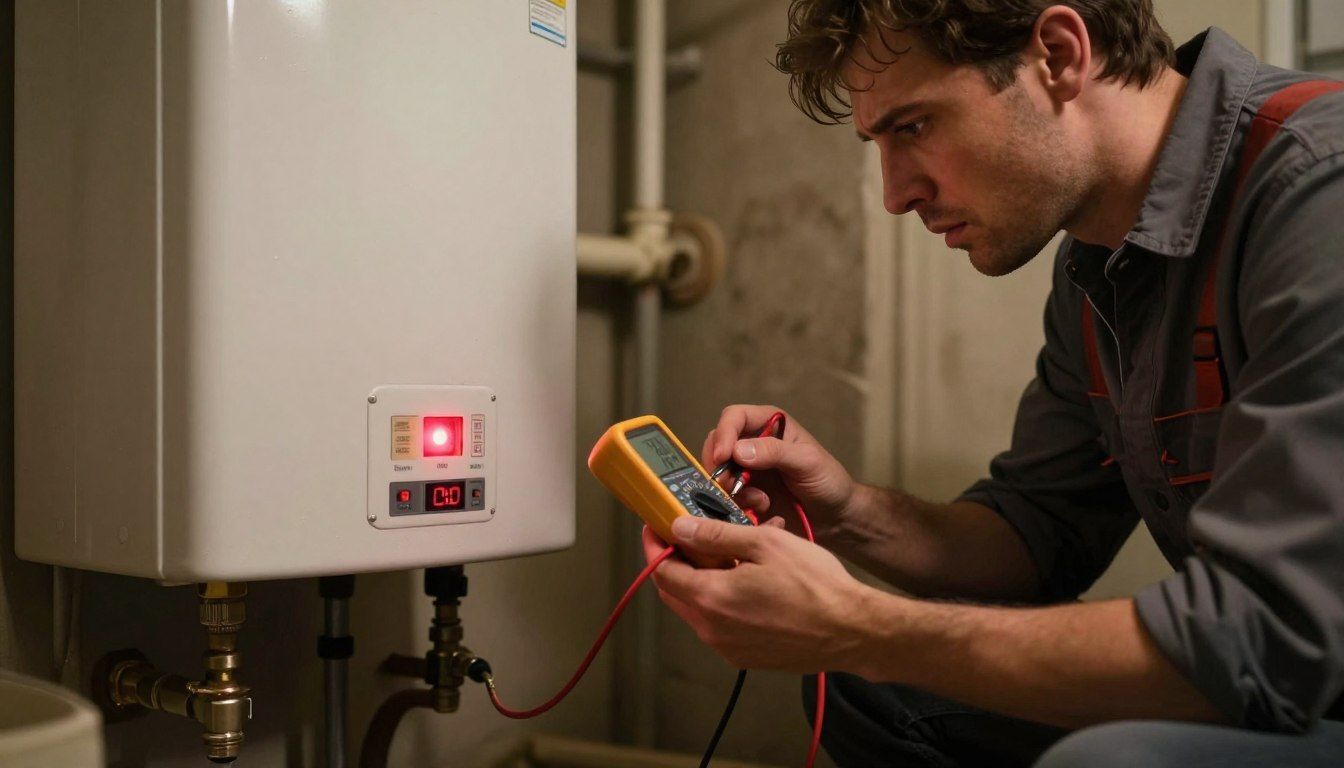
Use a multimeter to test each element's continuity and check for burnout. Disconnect all power at the breaker before opening access panels. Replacing a faulty element is manageable, but safety remains the top priority.
Incorrect or Malfunctioning Thermostat Setting
Check the thermostat temperature and recommended setting
Sometimes, adjusting a dial solves your water heater temperature issues. Most manufacturers recommend a thermostat setting between 120 and 140 degrees Fahrenheit. If the setting is too low, water will not reach the desired heat level.
Test the thermostat and replace it when it cannot maintain heat
If the dial is correct but water stays lukewarm, the thermostat may be faulty. A faulty thermostat cannot signal the heating elements to turn on, leaving water cold. If testing shows it is unresponsive, replace it to restore reliable performance.
Gas Supply and Burner Problems That Prevent Heating
Understanding gas flow and ignition helps with fixing hot water heater problems safely. Gas units need careful combustion, which simple maintenance issues or supply failures can interrupt. Before repairs, ventilate the area and check for any gas smell.
https://www.youtube.com/watch?v=rX8bRno0I6w
Pilot Light Is Out
Relight a standing pilot according to the manufacturer’s instructions
If your water heater uses a standing pilot, a draft may have blown out the flame. Check the tank label for the lighting sequence because steps vary by model. Always follow the manufacturer's guidelines to avoid filling the burner chamber with gas.
Investigate a pilot that will not stay lit
A pilot that will not stay lit often points to a faulty thermocouple. This small sensor detects flame heat and tells the gas valve to stay open. If the thermocouple is misaligned or worn, the system shuts off gas as a safety measure.
Gas Supply Is Interrupted
Check the gas shutoff valve and other gas appliances
Sometimes, the problem is the gas supply line, not the heater. Check that the shutoff valve is in the "on" position. Test other gas appliances, such as a stove or furnace, for fuel.
Call the gas utility immediately for a suspected leak or supply problem
If other appliances do not work, or you smell a sulfur-like odor, leave the building immediately. Do not attempt to relight the pilot or touch electrical switches. Contact your local gas utility provider about a possible leak or service interruption.
Dirty Burner, Thermocouple, or Flame Sensor
Recognize weak, yellow, or irregular burner flames
A healthy burner flame should look crisp and blue. A weak, yellow, or flickering flame may mean the burner is dirty or its air intake is blocked. These problems prevent efficient water heating and are common signs during fixing hot water heater problems.
Clean accessible components only when the unit manual permits it
You may clear minor dust or debris from the air intake screen with a soft brush or vacuum. However, never disassemble the burner assembly unless your manual explicitly permits it. Safety is the priority when working with combustion components.
Arrange professional service for thermocouple and combustion repairs
If cleaning does not help, the thermocouple or flame sensor may need replacement. These parts are vital for safe operation and should be handled by a licensed professional. An expert can help keep your gas system compliant with safety codes.
Plumbing, Capacity, and Water Flow Causes
Plumbing layouts and tank conditions can cause no hot water from water heater symptoms. Even if burners or heating elements work, these factors can stop hot water from reaching your taps.
Sediment Buildup Inside the Tank
Identify rumbling, popping, cloudy water, and slow heating
Over time, minerals from your water supply settle at the tank’s bottom. This sediment layer insulates the water, making heating less efficient. You may hear popping or rumbling sounds as trapped bubbles escape.
Flush a tank water heater using the correct drain and hose procedure
Drain and flush the tank to remove this debris. Attach a garden hose to the drain valve and direct it to a safe area. Open the valve so pressure pushes out mineral deposits.
Tank Is Too Small for Household Demand
Compare tank capacity with simultaneous showers and appliance use
Your tank may be too small if your household or water use has grown. Several showers or appliances can empty its hot water supply quickly. This can cause no hot water from water heater problems during busy times.
Reduce peak demand or consider a larger or tankless replacement
Stagger showers or run the dishwasher at night to reduce demand. If this does not help, choose a larger tank or high-efficiency tankless unit. This upgrade offers the best long-term solution.
Dip Tube Is Broken or Deteriorated
Understand how a dip tube directs cold water to the tank bottom
The dip tube sends incoming cold water to the tank’s bottom for heating. If it breaks, cold water mixes with hot water at the top. This creates lukewarm water instead of the expected hot temperature.
Recognize lukewarm water, plastic pieces, and rapidly changing temperatures
Small plastic pieces in faucet aerators may show that the dip tube is falling apart. Replacing the tube is a standard repair. It restores proper water flow to the heating area.
Hot and Cold Water Lines Are Cross-Connected
Check single-handle faucets, mixing valves, and plumbing connections
A faulty single-handle faucet or damaged mixing valve may let cold water enter the hot line. This cross-connection can seem like no hot water from water heater output, even when the tank works. Inspect shower valves and sink faucets for crossover signs.
Isolate the faulty fixture or valve causing cold water to enter the hot line
Test this by turning off each fixture’s water supply, one at a time. If the water gets hotter after isolating one valve, you found the source.
Tankless Water Heater Has Low Flow or Mineral Scale
Clean the inlet filter and inspect for restricted water flow
Tankless units need steady water flow to start heating. A clogged inlet filter may prevent the unit from igniting. Clean this filter regularly so the system detects flow correctly.
Descale the heat exchanger according to the manufacturer’s directions
Mineral scale can build up inside the heat exchanger and restrict water flow. It also lowers heating efficiency. A professional descaling process with vinegar solution removes deposits and restores hot water.
When to Call a Professional and How to Prevent More Hot Water Issues
Fixing a water heater not producing hot water calls for simple maintenance and expert help. Some minor adjustments are safe for homeowners, but complex or unsafe problems require a licensed plumber.
Know Which Repairs Require Licensed Service
Get professional help for gas leaks, electrical faults, tank leaks, and pressure problems
Safety comes first when you work with plumbing equipment. If you smell gas, see electrical arcing, or find water leaking from the tank, stop immediately. Then call a professional.
- Gas leaks pose an immediate fire or explosion risk.
- Electrical faults can lead to dangerous shocks or house fires.
- Persistent tank leaks often indicate structural failure that cannot be patched.
- High-pressure issues may signal a faulty relief valve or dangerous internal buildup.
Replace a severely corroded or aging water heater instead of repeatedly repairing it
If your unit is over ten years old and heavily rusted or corroded, repairs may only provide temporary relief. A new, energy-efficient model often costs less than frequent service calls for an aging system.
Use a Practical Maintenance Schedule
Test the temperature and pressure relief valve carefully
The temperature and pressure relief valve is a critical safety component. Test it each year to ensure it opens and closes properly, preventing dangerous pressure buildup inside the tank.
Flush storage tanks and service tankless units at recommended intervals
Sediment buildup often causes a water heater not producing hot water. Flush your tank once a year to remove mineral deposits that insulate the heating element and reduce efficiency.
Inspect connections, anode rods, insulation, and visible corrosion
Regular visual inspections can reveal small problems before they become costly failures. Check your anode rod every two years to see whether it needs replacement. The rod protects the tank from corrosion.
Restore Reliable Hot Water Efficiently
Match the solution to the cause instead of repeatedly resetting the unit
Pressing the thermostat reset button is not a permanent solution. If the unit keeps failing, find the root cause, such as a faulty heating element or tripped breaker. This ensures a lasting fix.
Compare repair costs, energy efficiency, warranty coverage, and replacement age
Before choosing a major repair, evaluate your unit's long-term value. Consider these factors:
- Repair Costs: Does the repair cost exceed 50% of a new unit's price?
- Energy Efficiency: Will a new model lower your monthly utility bills?
- Warranty Coverage: Is the repair covered under your existing manufacturer warranty?
- Equipment Age: Is the unit nearing the end of its expected lifespan?
Conclusion
Reliable hot water starts with finding the exact cause of equipment failure. First, check whether one faucet or every tap in your house lacks heat. This step helps you begin resolving hot water heater issues in the right way.
Many problems begin with electrical or gas interruptions, such as a tripped breaker, faulty thermostat, or pilot light needing relighting. Sediment buildup or a broken dip tube can create performance gaps. Each problem needs its own fix, not a generic reset of your unit.
Safety is the top priority during every repair attempt. Stop immediately if you detect gas leaks, electrical sparks, or high-pressure water sprays. Contact a licensed plumber or technician from Rheem, A.O. Smith, or Bradford White for complex hazards.
Matching the right solution to the verified cause saves time and protects your investment. Regular maintenance keeps your system running smoothly for years. Take charge of your home plumbing when resolving hot water heater issues, so your family enjoys a steady supply of hot water.